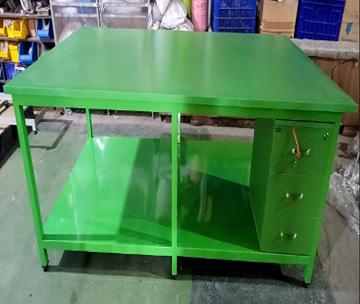
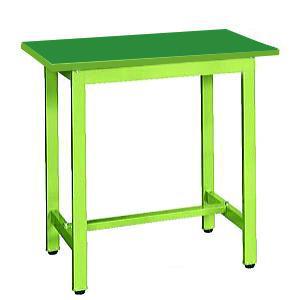
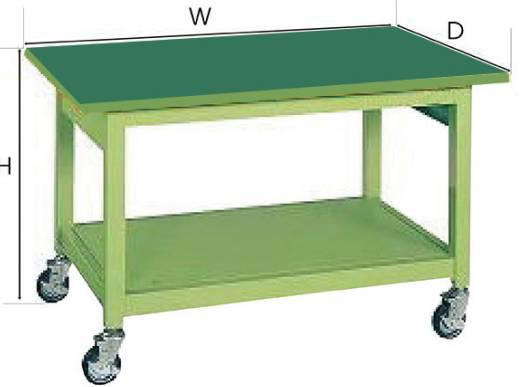
Workbench with Document Cabinet is a specialized workstation designed for assembly, inspection, repair, or packaging tasks in production lines and mechanical workshops. The key feature is the integrated cabinet/drawer unit.
- Structure:
- Frame: Typically made of square steel tubing or shaped steel with powder coating, ensuring rigidity and high load-bearing capacity.
- Tabletop: Can be made from various materials depending on requirements (e.g., Melamine/Formica-faced industrial wood, ESD anti-static rubber, or steel sheet).
- Document Cabinet/Drawers: Securely integrated into the frame (usually on one or both sides) for storing documents, small tools, or critical components.
- Purpose: Provides a comfortable, durable workspace with on-site storage capabilities.
Specifications of Workbench with Document Cabinet
- Dimensions: Length 2400mm x Width 1200mm x Height 750mm
- Frame uses square steel tube 40x40x1.2mm
- Upper tabletop uses 25mm thick MDF wood with melamine surface
- Lower shelf uses 1.0mm thick steel plate
- Frame is welded as a single piece, powder-coated
- 1 document cabinet with 3 drawers, dimensions 400x450x525mm
- 4 adjustable feet with rubber bases M10x30mm
Key Highlights:
- Sturdy and durable steel frame structure, powder-coated to prevent rust and enhance aesthetics.
- Spacious, flat tabletop made of durable, heavy-duty material (industrial wood or metal with anti-slip static-dissipative rubber).
- Convenient document cabinet with smooth-sliding drawers to store tools, documents, or essential items, keeping the workspace neat.
- Can be equipped with casters for mobility to reposition the workbench as needed.
- User-friendly design, convenient for assembly, repair, inspection, and document/tool management.
Effective Usage Guidelines:
- Categorized Storage:
- Use drawers to clearly categorize documents, drawings, work instructions (WI), and small tools to avoid searching time.
- The bottom drawer can be used for less frequently used tools or spare supplies.
- Specialized Tabletop Usage:
- If equipped with an ESD tabletop, ensure operators are grounded (using an ESD wrist strap) to maintain anti-static properties.
- Keep the tabletop clean and place only necessary items for current tasks, applying 5S principles.
- Process Layout:
- Position the workbench conveniently within the production line to ensure a smooth workflow.
- Neatly organize electrical and pneumatic lines if cable management holes are present to ensure safety.
Precautions:
- Drawer Load: Do not overload drawers to prevent slide rail deformation or table instability when opened.
- Regular Cleaning: Frequently clean the steel frame and tabletop to remove dust and grease, especially in drawers.
- Lock Inspection: If drawers have locks, ensure they function properly to protect important items.
- Environment: Avoid placing the table in overly humid areas or areas directly exposed to harsh chemicals to prevent coating damage.